Period Upholstery Projects
Upholstery Fabric for a Model A Ford Car
Using a swatch of original upholstery fabric, upholstery fabric was custom designed. Coopworth wool from Norfolk County, Ontario was selected for its strong characteristics. The wool was blended with mohair to increase strength and luster to the yarn. The yarn was custom dyed by Iron Cauldron to match the original swatch. The original fabric was analyzed to achieve the correct weave structure.


Upholstery Fabric for a Regency Period Sofa
This sofa which dates to c. 1830 is in the collection of Black Creek Pioneer Village. The frame is a mahogany veneer over a pine groundwood.
The upholstery seen on the sofa is not original or period appropriate.
The fabric for the restoration was woven using a blend of custom spun Coopworth wool and mohair. The yarn is glossy and strong to produce a durable upholstery fabric.
The design for the fabric is Pattern 207 taken from the Norwich Worsted Pattern Book, 1785-1831.
The yarn was small batch dyed by Liam Blackburn, woven by Upper Canada Weaving and upholstered by Johnathan O’Neill.

Sofa before re-upholstery
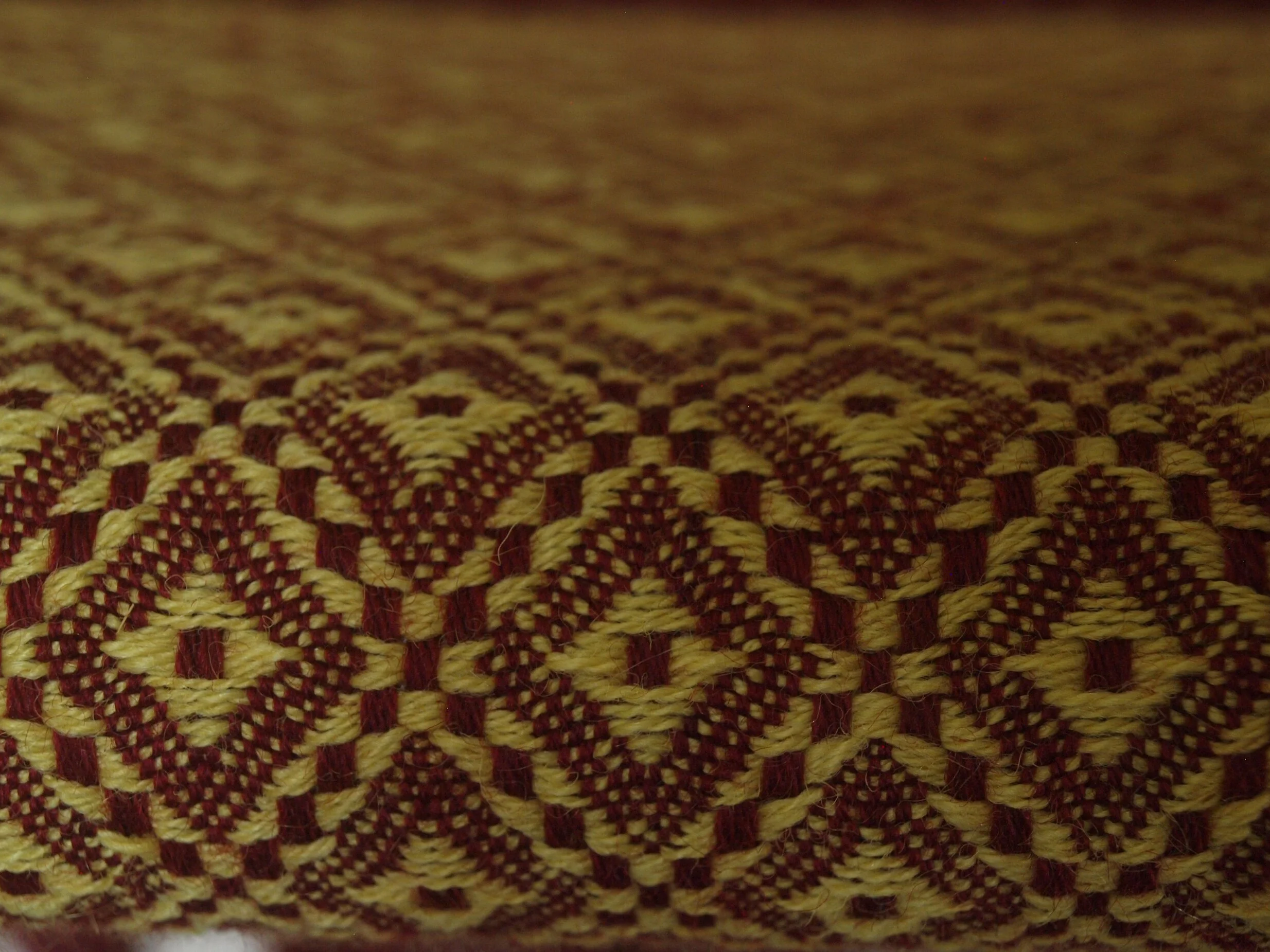
Upholstery fabric on the loom

Coopworth and mohair yarn custom spun by Wellington Fibres
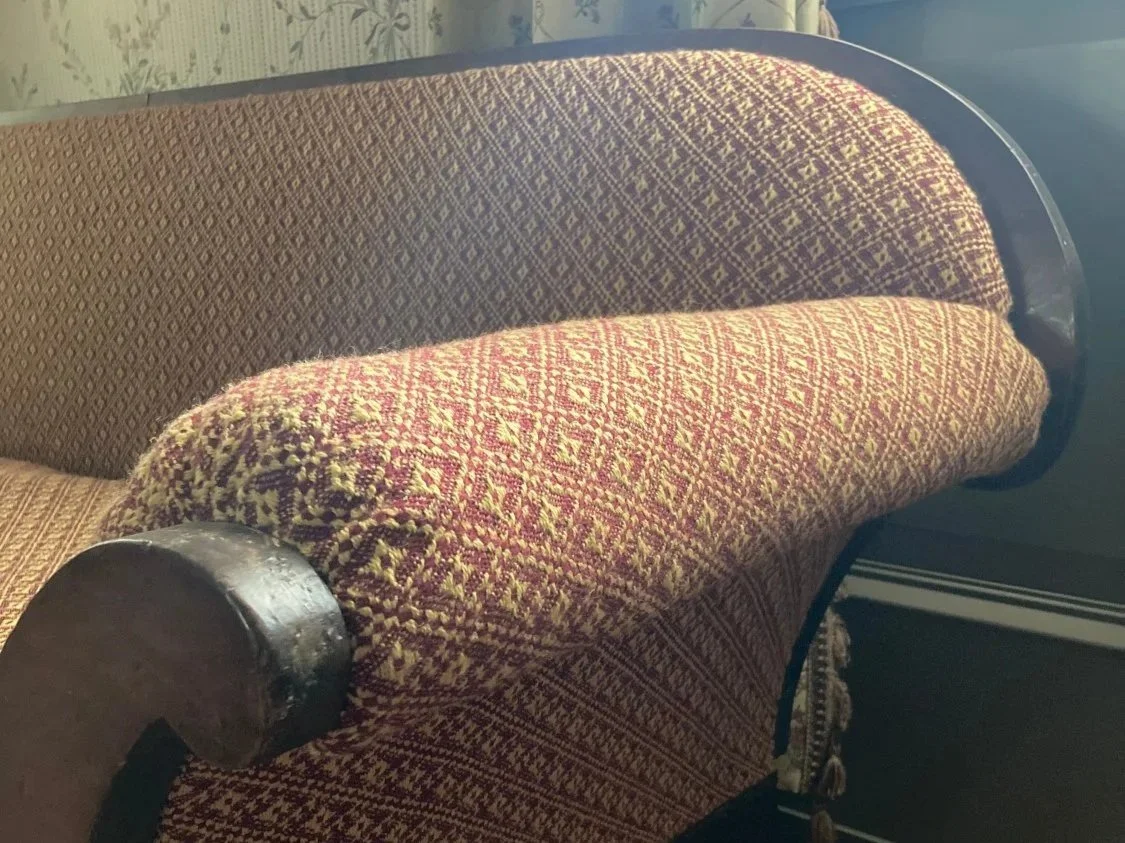
Sofa upholstered
Upholstery Fabric for a Gothic Revival Settee
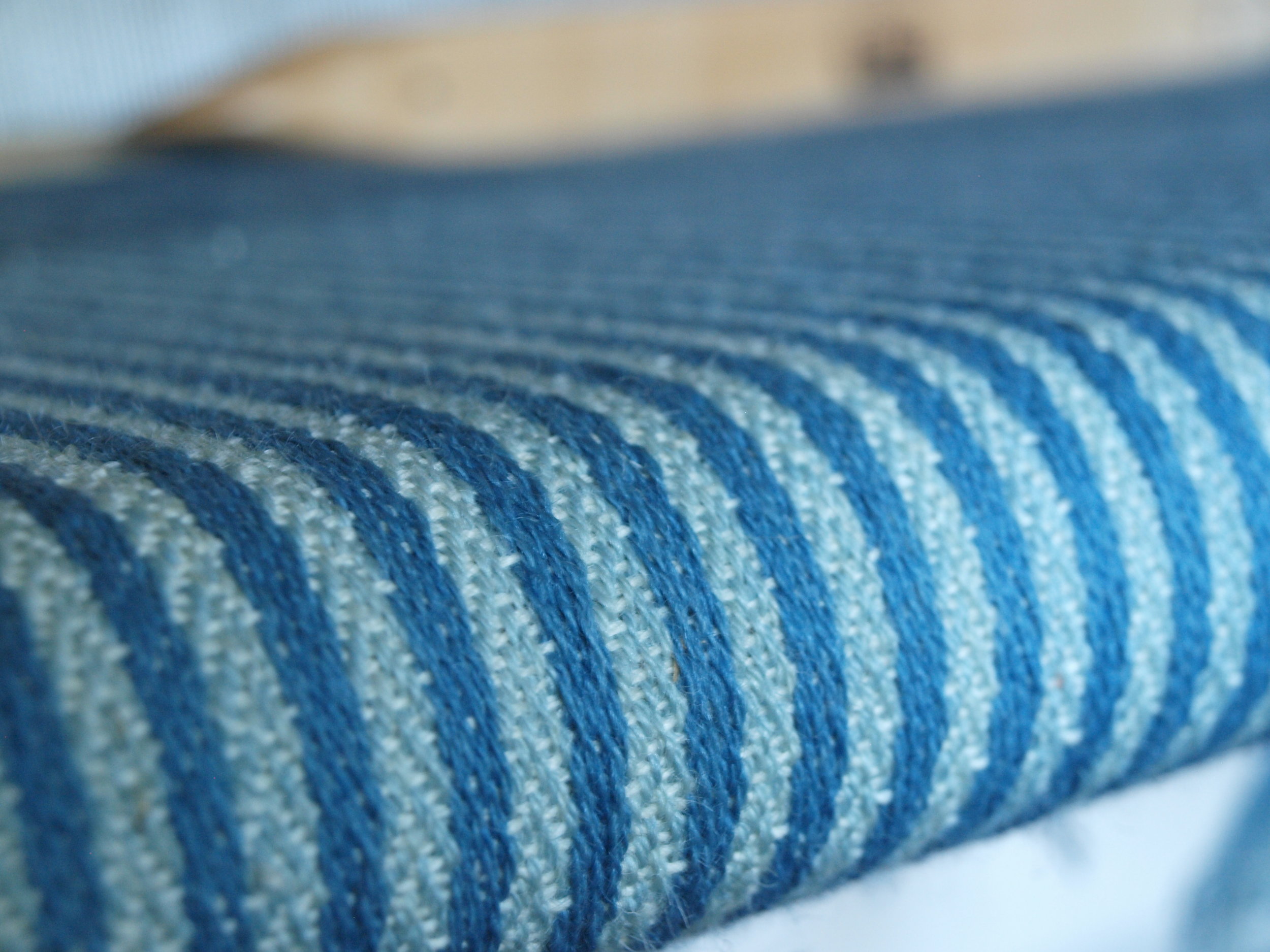
This Gothic Revival Settee is on display in Flynn House, Black Creek Pioneer Village, Toronto.
The fabric for this settee is based on a herringbone and satin striped fabric on a sofa in the collection of Black Creek Pioneer Village. The sofa with the satin stripe has provenance to the Merritt family of St. Catharines.
The yarn was custom spun at Wellington Fibres in Elora using Coopworth wool and mohair. The Coopworth wool is sourced to Woolley’s Lambs in Simcoe and the Mohair, from Wellington Fibres in Elora.
The yarn was small batch dyed in two shades of indigo by Liam Blackburn of Iron Cauldron Colour Works; the fabric was woven by Deborah at Upper Canada Weaving and the settee was upholstered by Johnathan O’Neill.


